How HVAC Companies Lose Customers to Slow Response Times
The Hidden Cost of Slow Response Times in HVAC
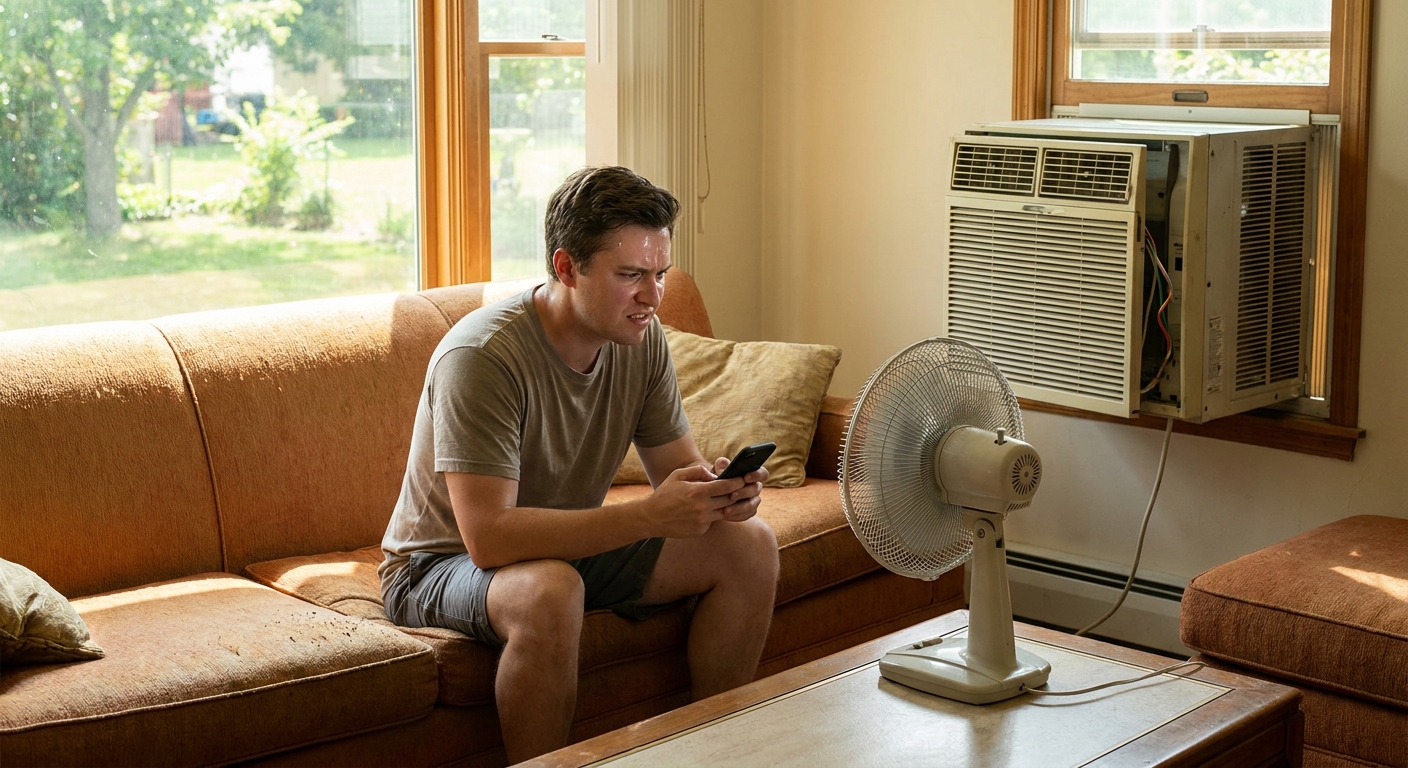
When a customer's AC dies in July or their furnace quits in January, they're not patient. They're sweating, freezing, or watching water pool on the basement floor. They want help now. And if you don't answer the phone within a few rings, they're already dialing your competitor.
Here's the brutal truth: the average HVAC company misses 20-30% of inbound calls, and according to research from BIA/Kelsey, 85% of customers who don't reach you on the first try will never call back. They'll find someone who picks up.
If your average ticket is $450 and you're missing even 5 calls a week, that's potentially $9,000 a month walking out the door. Multiply that across a year and you're looking at six figures in lost revenue from a problem most owners don't even track.
Let's break down exactly how slow response times kill HVAC businesses, and what you can do to stop the bleeding.
Why Customers Won't Wait for HVAC Service
HVAC and plumbing aren't like other industries. Nobody calls you for fun. They call because something is broken, leaking, or making a horrible noise. The emotional state of your caller is already stressed — and stress doesn't wait.
A 2023 study from Google found that 60% of consumers expect a response within 10 minutes when they reach out to a service business. For emergency services like HVAC, that window shrinks to roughly 2-3 minutes.
Here's what's running through a customer's head when their system fails:
- "How fast can someone get here?"
- "Will I have to take off work?"
- "How much is this going to cost?"
- "Should I call someone else just in case?"
The 5-Minute Rule
Research from the Harvard Business Review found that companies responding to leads within 5 minutes are 100x more likely to convert than those responding in 30 minutes or more. For HVAC, that gap is even wider because the work is urgent.
If your phone rings and goes to voicemail, you've already lost. Most callers won't leave a message. They'll just hang up and try the next listing.
The Real Math: What Missed Calls Cost You
Let's get specific. Say you run a mid-sized HVAC operation:
- Inbound calls per week: 80
- Missed call rate: 25% (industry average)
- Missed calls per week: 20
- Conversion rate on answered calls: 50%
- Average ticket value: $475
And this doesn't even count after-hours calls. If you only answer 9-to-5, you're missing emergency calls on nights and weekends — the exact times customers are willing to pay premium rates. We've covered this in detail in our post on why HVAC companies need 24/7 phone coverage.
Why Traditional Solutions Don't Work
Most HVAC owners try the obvious fixes first. They don't work. Here's why.
Voicemail
Voicemail is where leads go to die. Studies show 80% of callers will not leave a voicemail for a service business. They want a human (or something that sounds like one) answering the phone. A voicemail box is functionally the same as a missed call.
Hiring a Receptionist
A full-time receptionist costs $35,000-$50,000 per year, plus benefits, sick days, and training. They work 40 hours a week — meaning nights, weekends, and lunch breaks are still uncovered. And one person can only handle one call at a time. Two calls come in at once? You just lost one.
Your Next Job Is One Missed Call Away.
PickupBell answers every call and books jobs directly on your calendar — 24/7, automatically. $199/month.
Start Free TrialCall Center Services
Traditional call centers run $1,500-$3,000 per month, often charge per minute, and the agents don't know your business. They read from a script, mispronounce equipment names, and frustrate customers who can tell they're not talking to someone local.
Cell Phone Forwarding
Forwarding calls to your personal phone means you're answering the phone with a torque wrench in your hand, on a roof in 95-degree heat, or driving between jobs. Customers can hear it. The professionalism drops, and so does your conversion rate.
How AI Receptionists Solve the Response Time Problem
This is where the industry has shifted in the last two years. AI receptionists like PickupBell answer every call within one ring, 24/7, for a flat monthly fee — no per-minute charges, no missed calls, no voicemail purgatory.
Here's what a modern AI receptionist actually does for an HVAC business:
At $199/month, the pricing works out to less than a single missed job. If it saves you even one call a month, it's already paid for itself ten times over.
And unlike a human, it doesn't call out sick, take vacation, or get overwhelmed during a heat wave when your phone is ringing off the hook. We dug into how this technology is reshaping the industry in our breakdown of how AI is changing HVAC customer service in 2026.
What About Booking?
The other huge advantage: AI handles appointment booking automatically. The customer talks to the AI, picks a time slot, and the job is on your calendar before they hang up. No callbacks, no phone tag, no lost leads. We've seen this approach cut no-show rates by 40% for the contractors using it.
How to Audit Your Own Response Times This Week
Before you change anything, you need to know how bad the problem actually is. Here's a simple 7-day audit you can run on your own business:
If you're missing more than 10% of calls, or taking more than 5 minutes to call back, you have a response time problem — and it's costing you serious money.
Key Takeaways
- The average HVAC company misses 20-30% of inbound calls, and 85% of those callers never call back
- Companies responding within 5 minutes are 100x more likely to convert than those taking 30+ minutes
- Missing just 5 calls a week can cost an HVAC business $9,000+ per month in lost revenue
- 80% of callers won't leave a voicemail — if you don't pick up, you lose the lead
- Traditional solutions like receptionists and call centers are expensive and only cover business hours
- AI receptionists like PickupBell answer every call 24/7 for a flat $199/month, with no per-minute charges
- Run a 7-day call audit to see exactly how much money slow response times are costing your business right now